

RELEASE HIGHLIGHTS
Fully native GitLab integration, supporting GitLab Cloud and self-hosted GitLab.
NATIVE GITLAB INTEGRATION
Syncing your repositories to our code intelligence platform, even easier.
Our users could already connect their teams to GitHub, but a native GitLab integration has also been heavily requested. It works in exactly the same way for GitLab.com Cloud users, and we’ve added full support for self-hosted GitLab instances too.
And yes — you can be connected to GitHub and GitLab at the same time, and even mix code vaults from different GIT providers in the same project!
You can connect your team to GitLab on the “Integrations” tab on the “Team settings” page
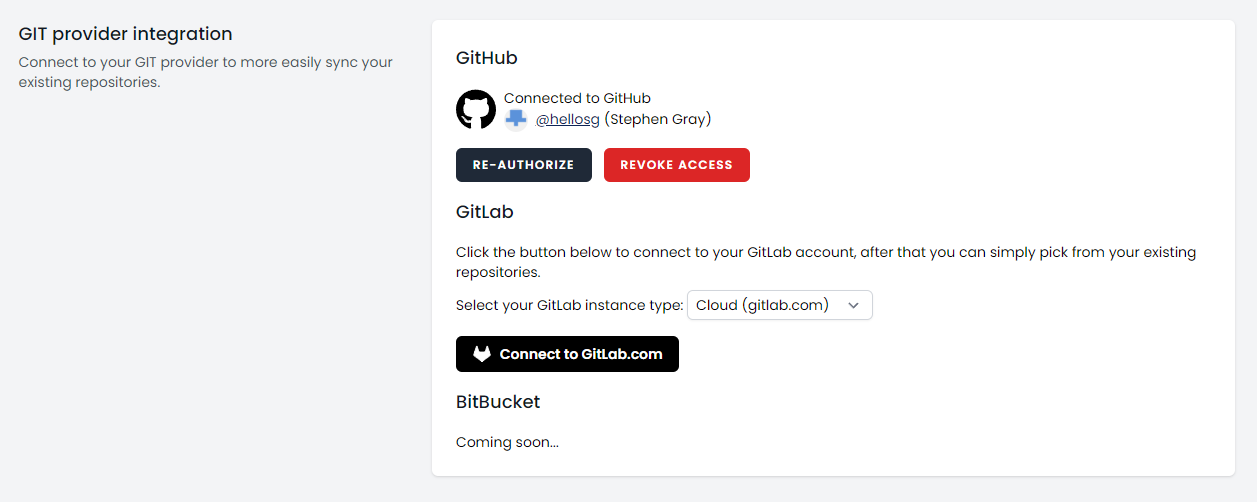
GitLab.com Cloud users
For GitLab.com Cloud users, it’s as simple as clicking “Connect to GitLab.com”
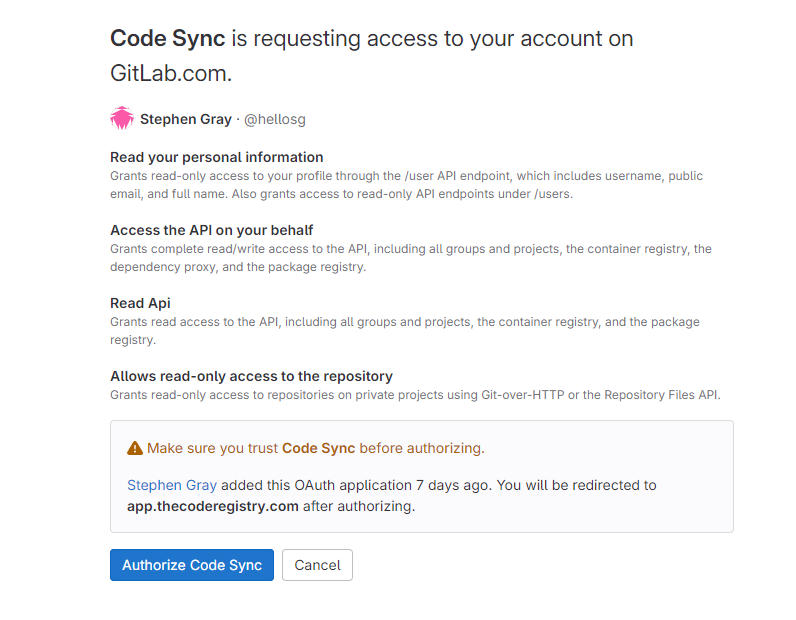
It’s as simple as that — you’re now connected!
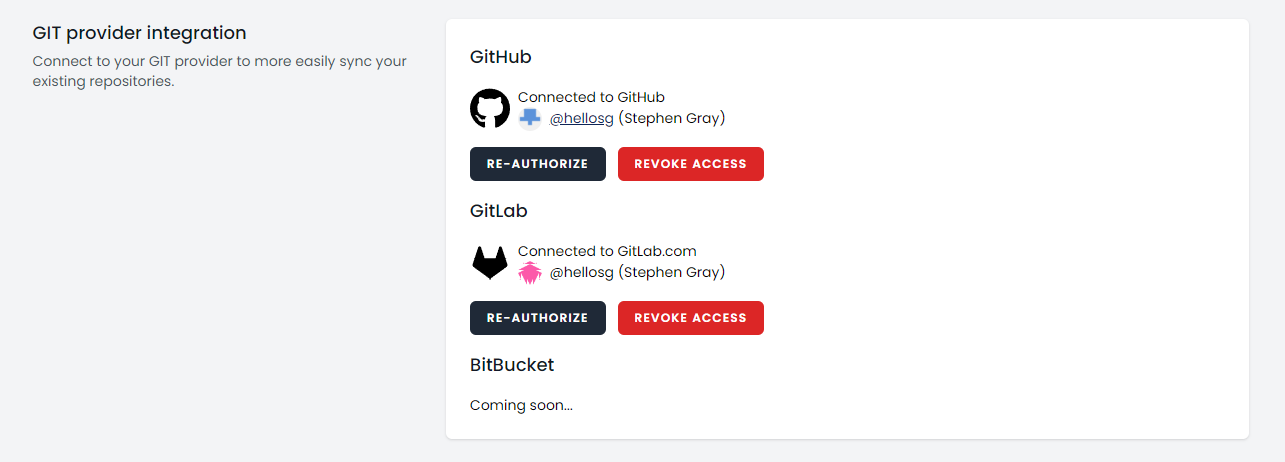
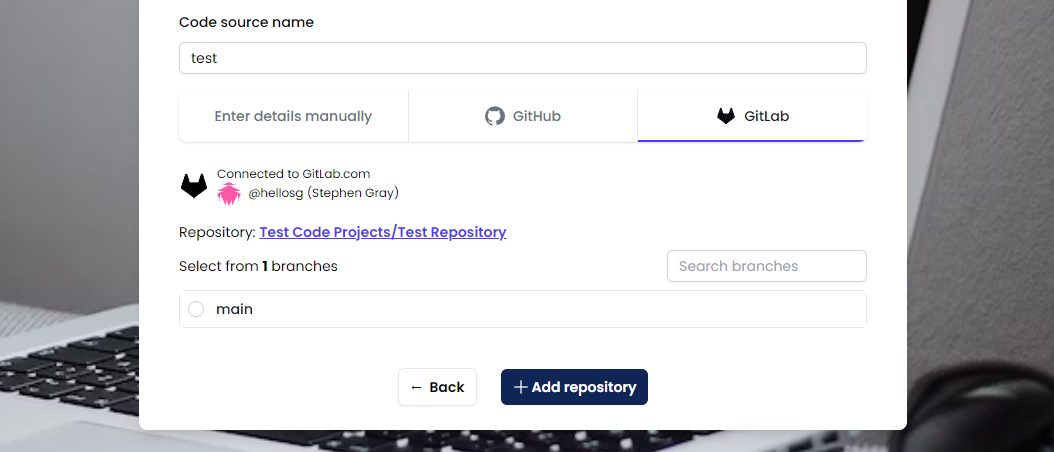
And when you add a code vault, you can simply select from your GitLab projects
GitLab.com self-hosted users
For self-hosted GitLab instances, the process has an extra step: you have to set up an OAuth application in your GitLab instance and add that application’s details to your team settings in The Code Registry. But don’t worry — we’ve written a very simple guide on exactly how to do this:
How to set up an OAuth Application in a private GitLab instance
When connecting to GitLab, select “self-hosted” as the GitLab type
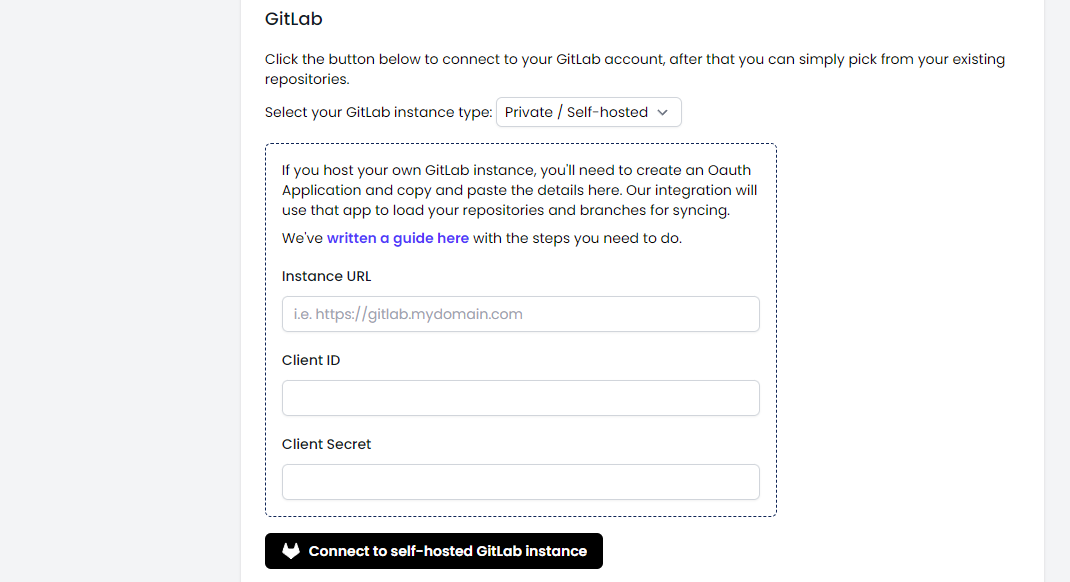
You then get a few extra fields to insert the OAuth application details. Simply follow the guide, copy and paste the credentials in, and click “Connect to self-hosted GitLab instance” — the rest of the process is exactly the same.
GITLAB SUPPORT IN OUR OFFICIAL BROWSER EXTENSIONS
GitLab (Cloud and self-hosted) is now fully supported.
Just like with GitHub.com, when viewing any GitLab project there’s a shiny new “Sync & Analyze” button that makes it very easy to sync your repository

This will connect your team on The Code Registry to GitLab, and then allow you to select a project to add the new code vault to (or create a new one). It couldn’t be simpler!

OTHER CHANGES
Ability to Create Empty Projects
This is a useful feature if you manage different development teams or a portfolio of different companies, and you want to invite them to your team to manage their own projects without accessing anything else.
You can now create an empty project and invite users with “vault creation” permission to that project. They can log in, see the empty project, and add and manage the code vaults within it — without access to anything else.

Staggering of Automated Replications
As our userbase grows and more automated replications are scheduled throughout the month, we’re constantly thinking about ways to improve resource usage and performance when our code analysis runs. With this goal in mind, we’ve implemented staggering for automated replications — so if many replications are scheduled at the same hour and day across all of our users, they’ll be slightly staggered to avoid a sudden resource spike causing stability issues. We’ll continue to monitor and optimise this over time.
BUG FIXES
- Fixed a bug when inviting a team member that doesn’t already have an account on The Code Registry — there was a scenario where that user wouldn’t have their personal team created, which caused an error.
FROM COMPLEXITY TO CLARITY
Move from uncertainty to complete code confidence.
Get the independent intelligence you need to understand, verify and protect your software.
Book a demo